
This story first appeared on NUS on 13 July 2026.
For these two NUS Class of 2026 graduates, the most impactful lessons they learnt came from beyond the classroom. One found them in courtrooms and a remote Thai village; the other, in a hospital corridor and a cardiac arrest.
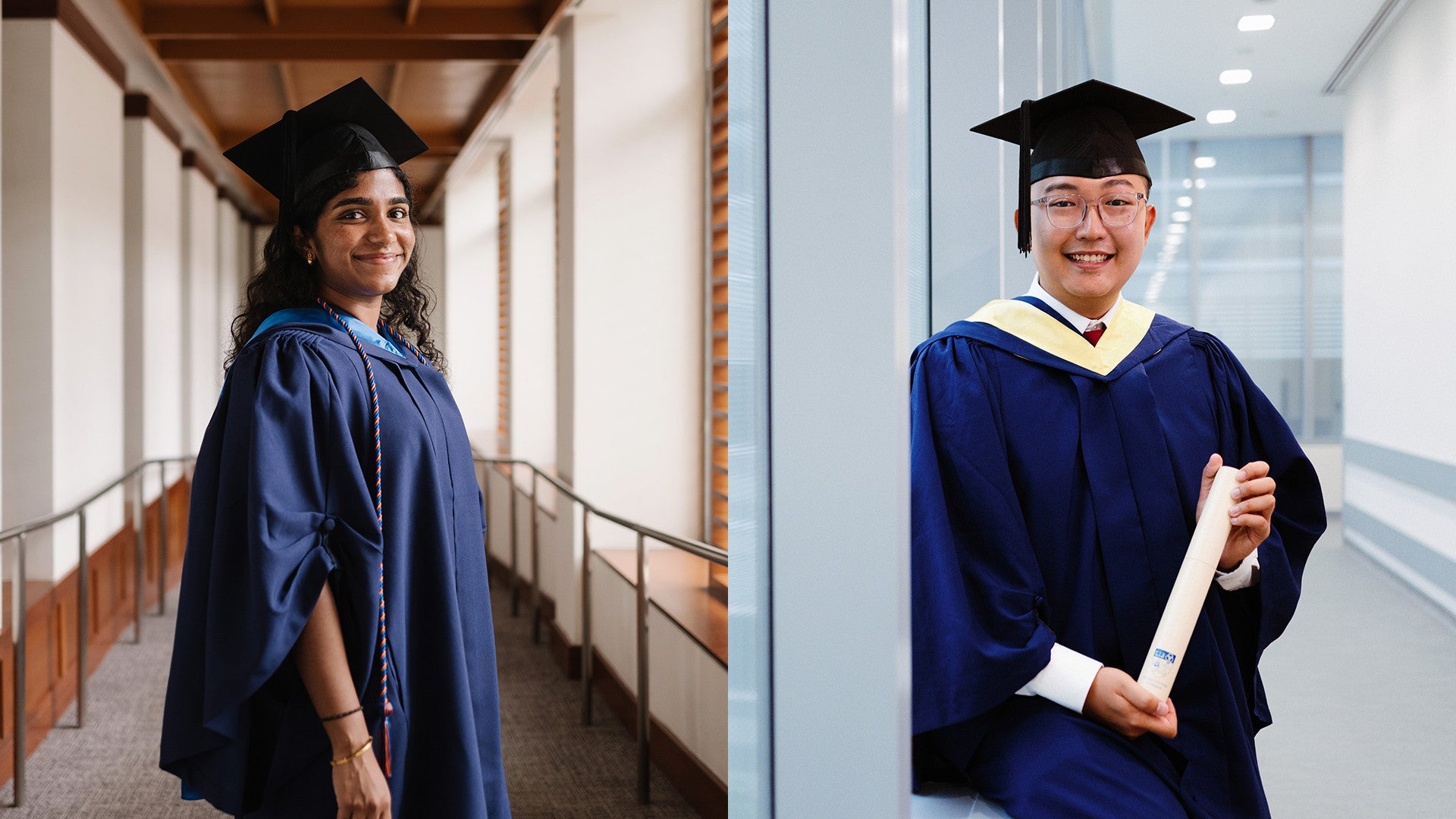 NUS Class of 2026 students Narakattuvalappil Netra (left) from NUS Law and NUS College, and Cheok Xin Lin (right) from NUS Nursing have found their “why” through the different experiential learnings offered by their respective courses.
Sitting in a courtroom watching a family in anguish as their loved one received a long prison sentence, law student Narakattuvalappil Netra felt the full weight of the law for the first time.
Sprinting through an HDB corridor with a defibrillator in hand, nursing student Cheok Xin Lin was responding to a cardiac arrest emergency in his community, knowing that every second before the paramedics arrived could mean the difference between life and death.
Netra and Xin Lin are two NUS students on very different paths, yet both realise that the most important lessons often take place outside the classroom.
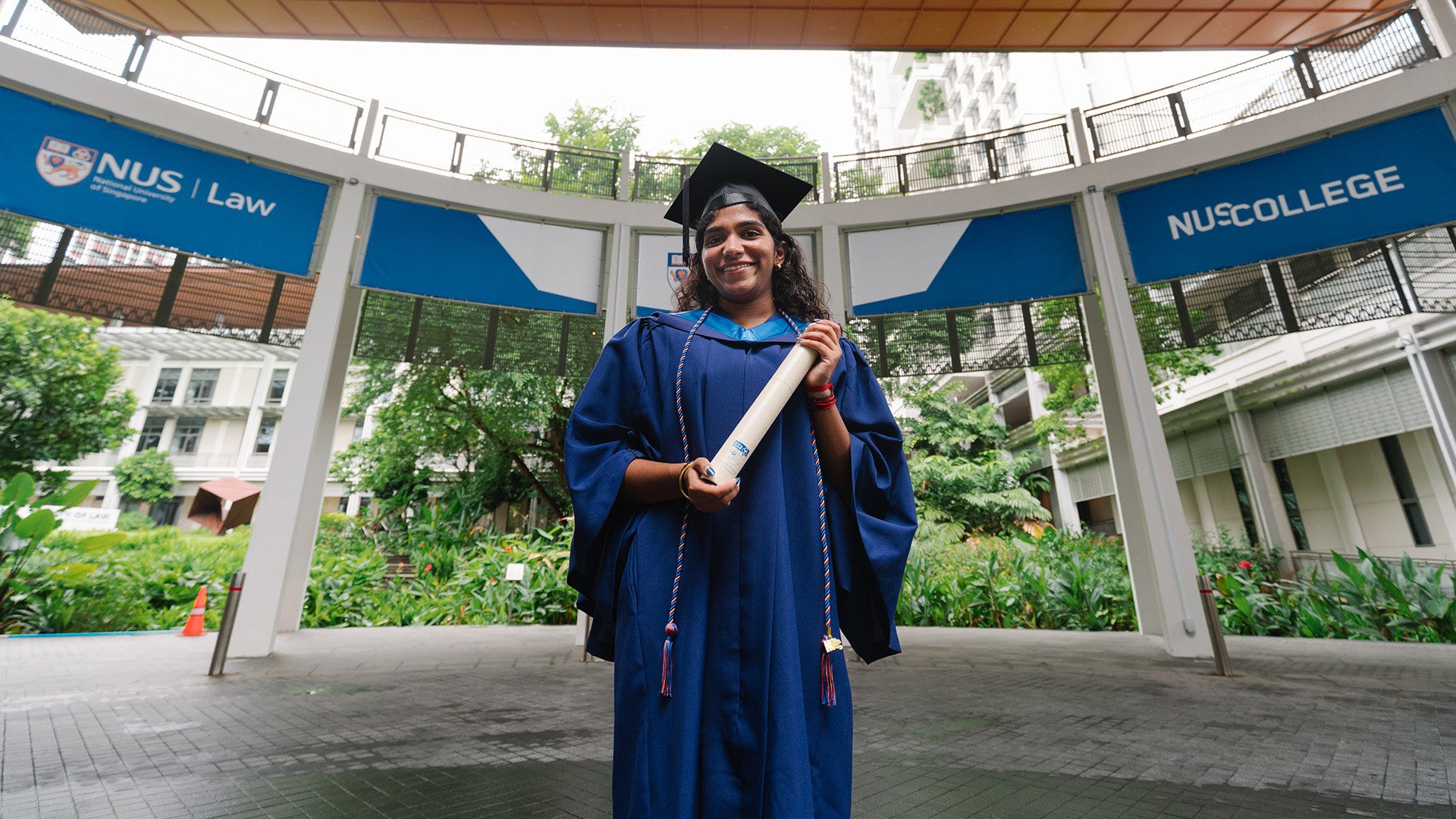 NUS Law graduate Netra is also part of the inaugural NUS College cohort, and both share the campus grounds at University Town.
Human faces behind the law
Netra joined NUS College’s inaugural intake in 2022, pursuing an interdisciplinary education alongside her law degree at NUS Law that introduced her to the human realities of the legal system.
Accumulating over 250 hours of pro bono work, including assisting in a capital drug trafficking case at the High Court, the 23-year-old found herself facing a side of the law that is not usually captured in textbooks.
“When you interact with accused persons, you realise more about their personal struggles. It forms a lot more empathy,” she said.
She found herself navigating a delicate balance as she felt for the families who watched their loved ones receive longer than expected sentences, yet as their legal assistant, she had to maintain a distance and remain professional.
These experiences reinforced the importance of access to justice. “A lot of people facing criminal charges do not have legal knowledge, which includes how to access legal help, making it very hard for them to navigate the system, understand their odds and ultimately come to a decision that they can accept – this is important so that they do not feel resigned to a certain fate,” she said.
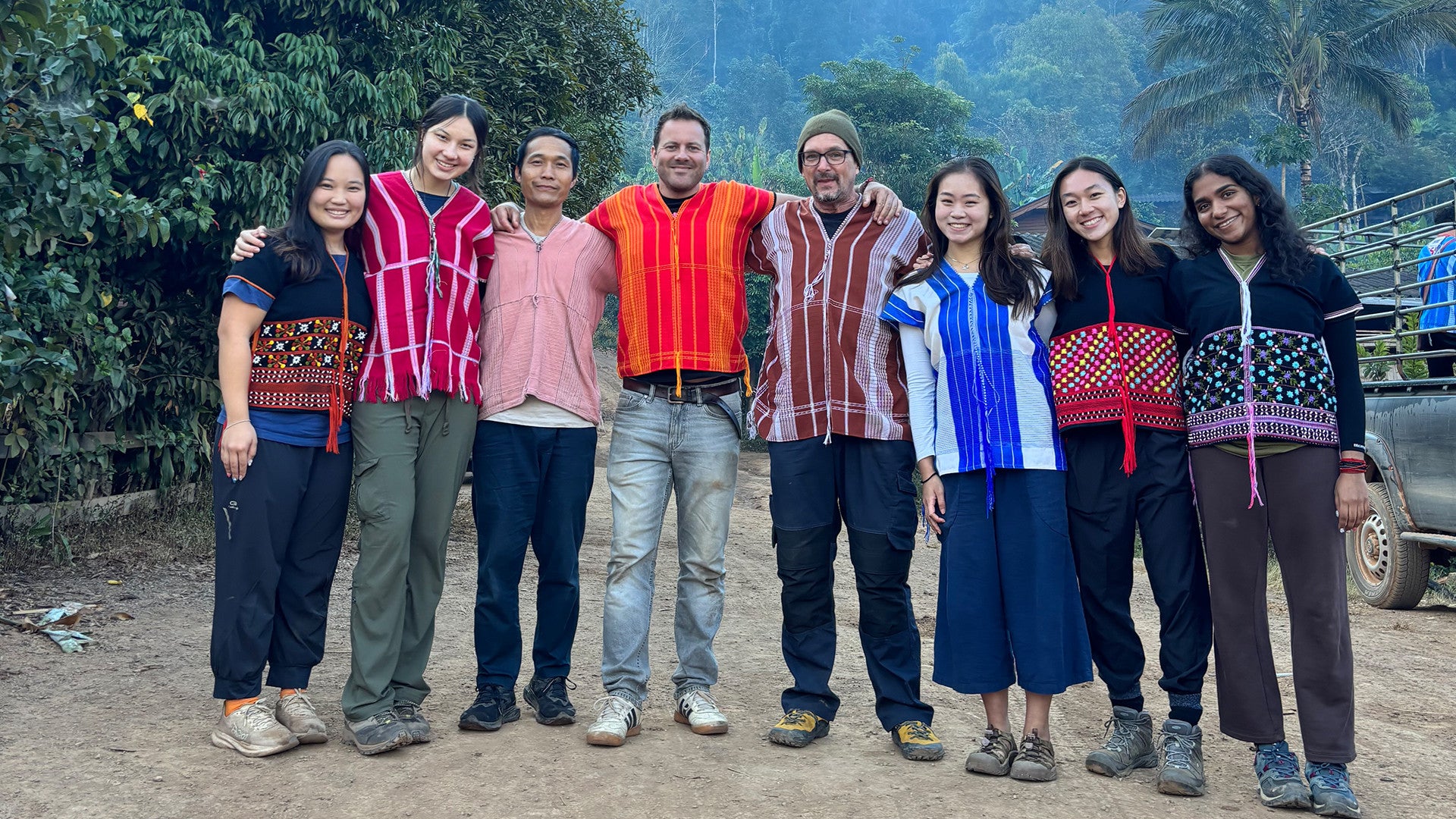 Netra (extreme right) with her teammates and professor from NUS College, along with their translator, dressed in traditional Karen attire during their visit to a Karen village in Chiang Mai, Thailand.
From the courtroom to Thailand’s rice fields
NUS College also took Netra to the remote hills of Chiang Mai, Thailand.
As part of her Impact Experience (IEx) project — NUS College’s two-year capstone where students work alongside communities in Singapore and Southeast Asia — Netra made six trips over two years to a Karen village, helping farmers transition from corn to coffee farming.
Although she and her team were full of enthusiasm, reality quickly set in. The farmers, who had debts to service and livelihoods to protect, were wary after a failed non-governmental organisation-led coffee initiative years earlier.
Her professor, Associate Professor Peter Vail at NUS College, reminded her that it was about the journey, not the destination. “There are a lot of things outside your control, and you can’t really fixate on that,” she recounted.
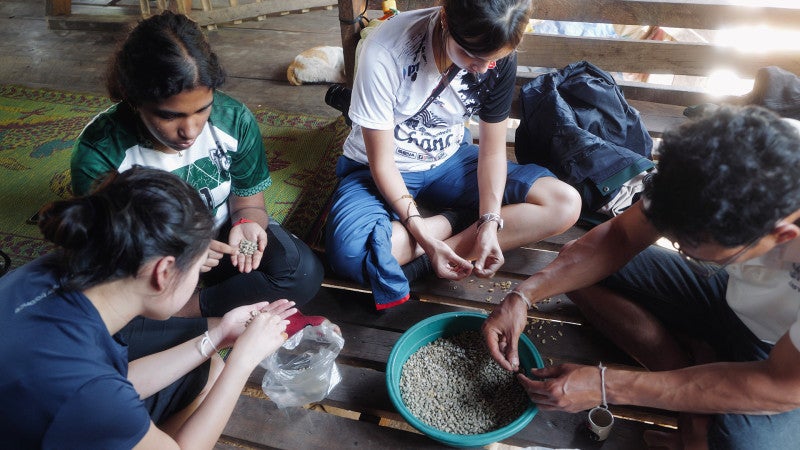
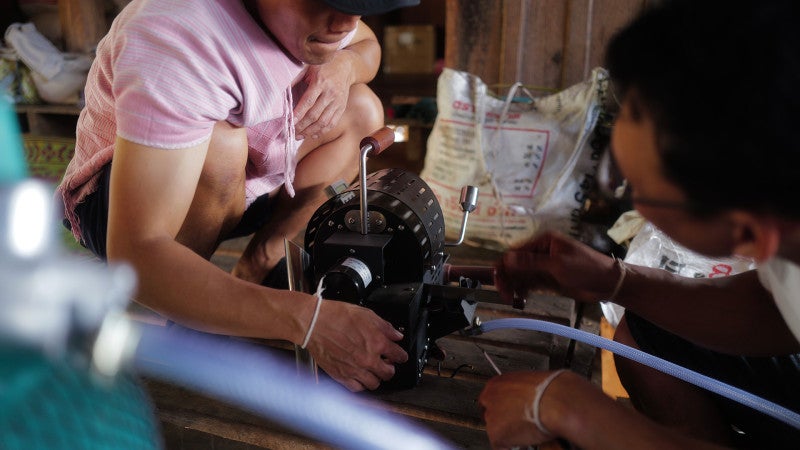
Rather than push for a wholesale transition, the team adjusted their approach by introducing farmers to how coffee is made and distributed, the qualities the industry looks for, and connecting them to a network they could turn to in the future. “It’s about understanding what they want from you, rather than what you want to bring for them,” she said.
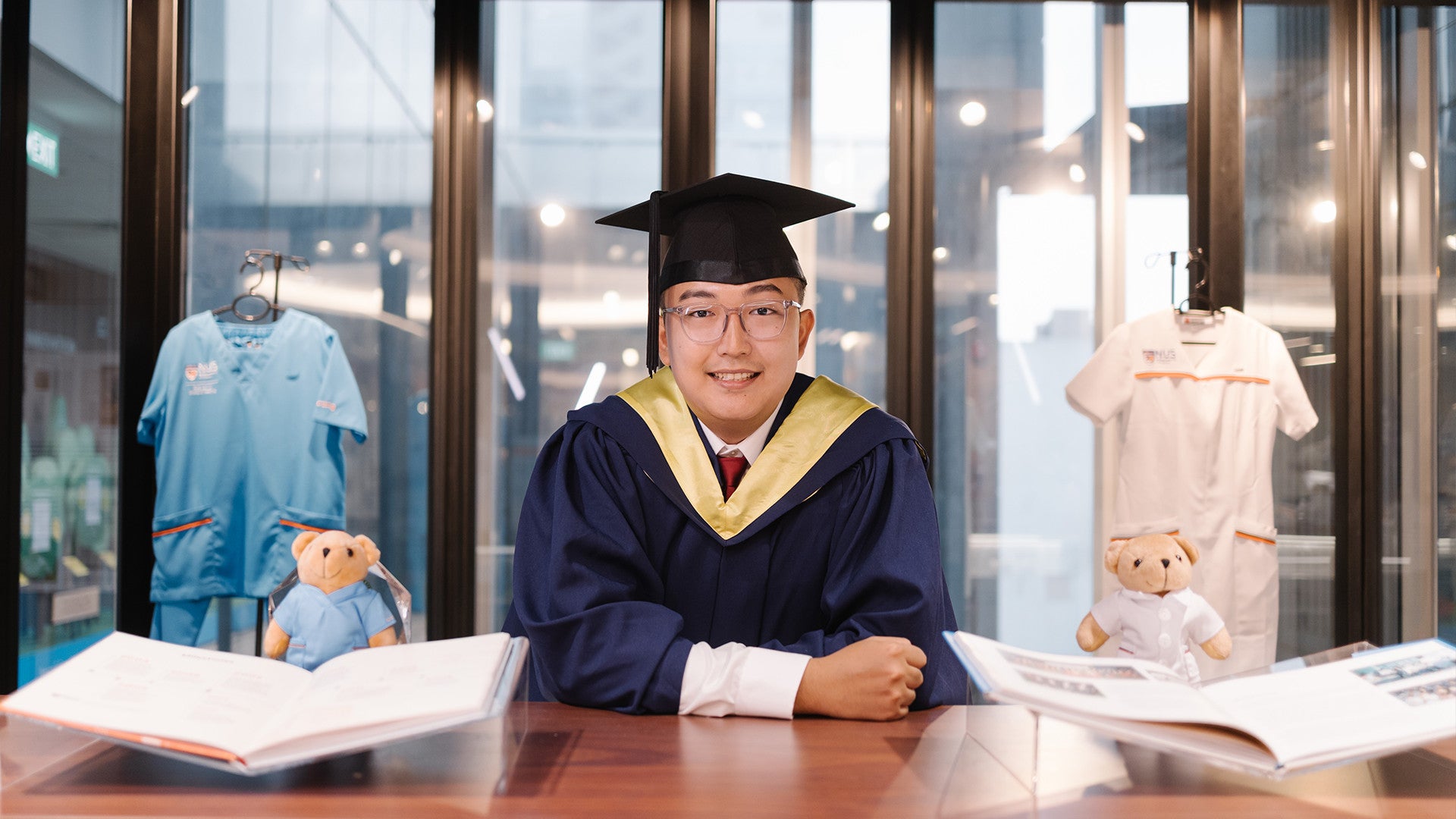 As his cohort’s representative, Xin Lin advocated for nursing students to wear scrubs (left) as they offered greater comfort during clinical postings compared to the traditional white nursing uniform (right).
Paramedic to nurse
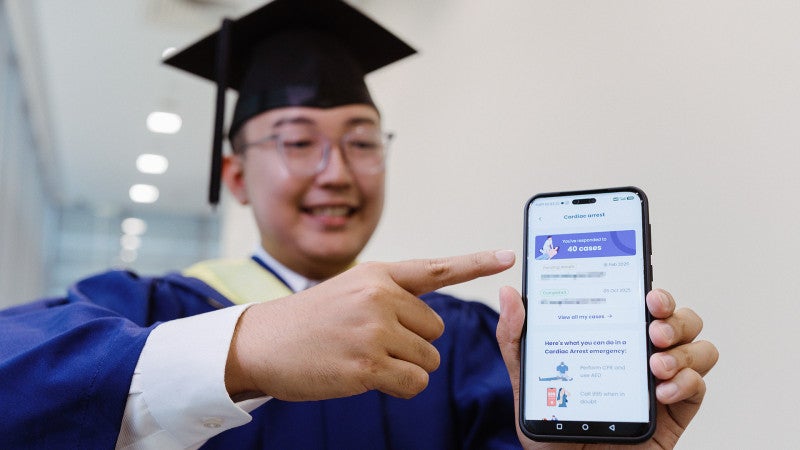
While Xin Lin started volunteering and responding to out-of-hospital cardiac arrest (OHCA) cases since his junior college days, serving as a brigade combat medic during his National Service (NS) was what deepened his interest in healthcare. After his NS, he continued volunteering with his constituency’s Community Emergency Response Team in Taman Jurong and continued responding to OHCAs through the myResponder app.
In those critical moments, he would work alongside paramedics from the Singapore Civil Defence Force to support the affected individual, solidifying his interest in medicine.
Inspired by these experiences, Xin Lin entered NUS Nursing with aspirations of becoming a paramedic. As it turned out, a different calling awaited him.
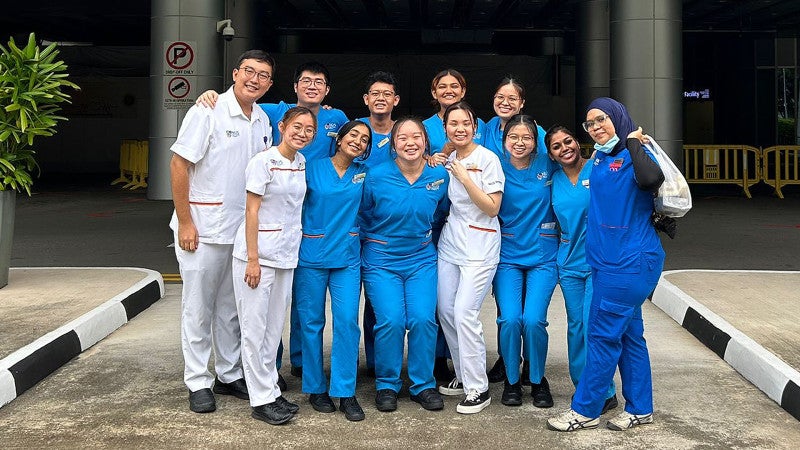
As part of his NUS nursing training, Xin Lin was posted to Ng Teng Fong General Hospital for four weeks. Attached first to a neurosurgery ward and then to a neuro-rehabilitation ward, Xin Lin found himself following the same patient through both postings, from acute care to recovery.
He realised that while paramedics work to keep a patient alive until they reach the hospital, nurses stay for the whole journey. “In healthcare, nursing is one of the few careers, if not the only career, that stays with the patient throughout,” he said.
Over time, his ambition changed from becoming a paramedic to becoming a nurse, as he found himself drawn to the more sustained care that nursing provides.
To ensure Xin Lin knew what he was in for, his father stress-tested his commitment for several months by pointing out the long hours, the demands, and the thankless nature of nursing. He was undeterred.
“Nursing gives me a sense of accomplishment as I’m able to directly impact someone’s life, to literally try to save them,” said Xin Lin, who received a Ministry of Health Holdings scholarship to study nursing at NUS.
He will be bonded to Alexandra Hospital for four years upon graduation.
His role model
For 25-year-old Xin Lin, being a nurse means more than delivering care at the bedside. It is also about giving voice to the nursing profession.
As cohort representative, Xin Lin started a feedback channel where fellow nursing students could raise concerns directly with the school.
Acting as a bridge between the student body and faculty, he raised issues such as the discomfort of the traditional white nursing uniform during clinical postings, which eventually led the school to transition to scrubs.
“There’s sometimes a gap between what the student body feels and what the school sees, and someone has to bridge that,” he said.
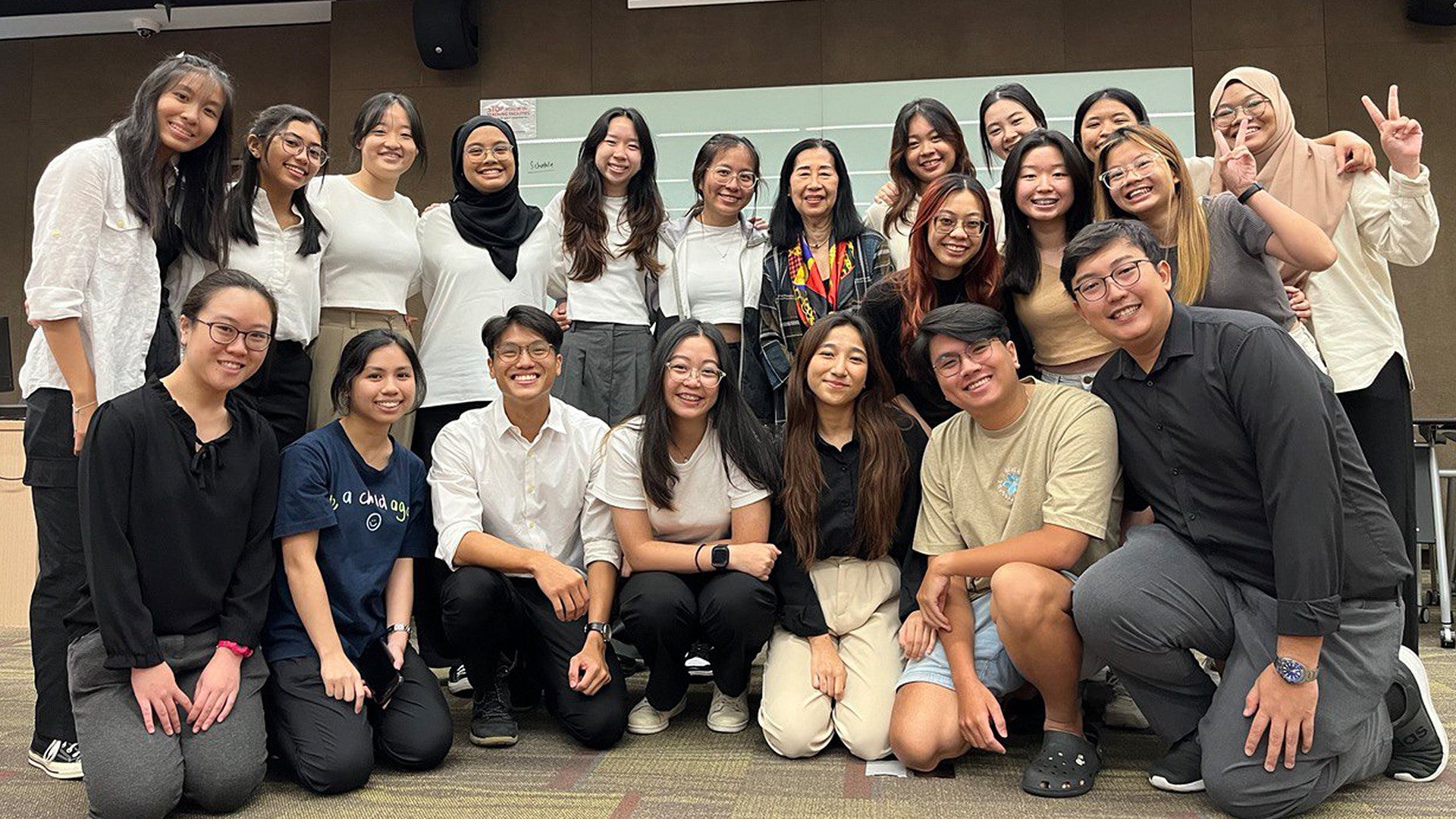 Xin Lin (first row, extreme right) and fellow nursing students with Ms Mary Yeo Kim Luang (back row, 7th from the left).
Xin Lin credits Ms Mary Yeo Kim Luang, an Associate Adjunct Lecturer at NUS Nursing and nursing veteran with 58 years of experience, for leaving a deep impression on him through her stories of fearless advocacy for her patients and fellow nurses.
“I want to be a nurse who is vocal, who won’t be silent on things that don’t sit right,” he said.
Living their dreams
With her sights set on criminal law and white-collar crime, Netra is studying for her bar exam, while a training contract beckons in January 2027.
“My experiences at NUS have given me a much better idea of what I want, what I value, and what I think the law should do,” she said.
For Xin Lin, the journey to becoming a nurse begins at Alexandra Hospital. He also dreams of one day becoming a nurse clinician or even representing nursing on a bigger stage, giving voice to a profession he feels is underappreciated and undervalued.
“There’s so much more that you can do,” he said to aspiring nurses. “Don’t confine yourself to just what you see today.”
This story is part of NUS News’ coverage of Commencement 2026, celebrating the achievements of our graduates from the Class of 2026. For more, read our stories and graduate profiles, check out the official Commencement website, or look up and tag #NUS2026 on our social media channels!