
By Eyu Kai Jie (Sociology + NUSC ’28).
When the first cohort of NUS College (NUSC) walked through the campus gates four years ago, there was no beaten path to follow and no seniors to look for guidance. They were starting from scratch – and they knew it. It was a blank canvas, full of uncertainty, but brimming with possibility, as NUS College Dean Professor Simon Chesterman puts it: “We are building the plane as we are flying it.”
Among them was Andrew Roy Toh, who stands today as the cohort’s first Valedictorian: a distinction he views not as a personal achievement, but as a testament to a collective leap of faith.

Seeing Beyond the Frame
For Andrew, finding his footing in NUSC’s uncharted territory began in the seminar room. Having graduated from polytechnic with a diploma in Mass Communication, he found comfort in analysing the world through this familiar lens. However, this comfort zone was consistently being challenged by the interdisciplinary curriculum that the college offers, which encourages students to think across disciplines rather than within them.
His favourite – and arguably most challenging – course was NST2005: The Doors of Perception: Biology, Technology and Culture, taught by the now-retired Associate Professor Don Favareu.
“The most memorable seminar was the first lesson where Prof Don introduced the course to us. He shared about the concept of ‘perception’ and what actually influences the way we perceive,” Andrew recalled. “From biological factors to technological advancements and cultural understanding, the introductory lesson taught me that there’s so much more to perception than what I knew, which in retrospect, wasn’t much to begin with.”
The perspectives he explored alongside his classmates and professor in their weekly seminars taught Andrew a vital lesson about navigating ambiguity: when faced with complex, unpredictable problems, relying on a single discipline is rarely enough. By learning how to creatively apply the logic behind different disciplines to his work, he gradually grew comfortable navigating intellectual spaces that were unfamiliar to him, a fundamental trait that reshaped how he intends to approach the complexities of the wider working world.
Rooted in Community
That very same willingness to step into the unknown guided Andrew across borders through the course of his Impact Experience Project (IEx). Andrew’s group, Team Bayanihan, travelled to the Philippines, faced with deforestation and climate change, to propagate the use of bamboo as a sustainable replacement. Team Bayanihan established a bamboo-based educational workshop series. Through the experience, Andrew realised that true impact is not about “providing solutions”, but about actively engaging their community partners to foster collaborative outcomes. They designed the “Bamboo for the Future” programme, teaching young children the science and artistry of bamboo through hands-on activities like weaving and catapult construction. Training local educators and volunteers such that the curriculum could be replicated, anchored their project in long-term sustainability.
 Andrew, winner of IEx Capstone Award (Individual) 2026, leading a hands-on bamboo workshop for local children in the Philippines as part of their IEx project.
“Knowledge sharing becomes most powerful when communities are empowered to continue the work even after we leave,” Andrew reflected. “It went from a place that had minimal knowledge of bamboo’s usefulness to a place that is now aware and willing to impart this knowledge to more people.”
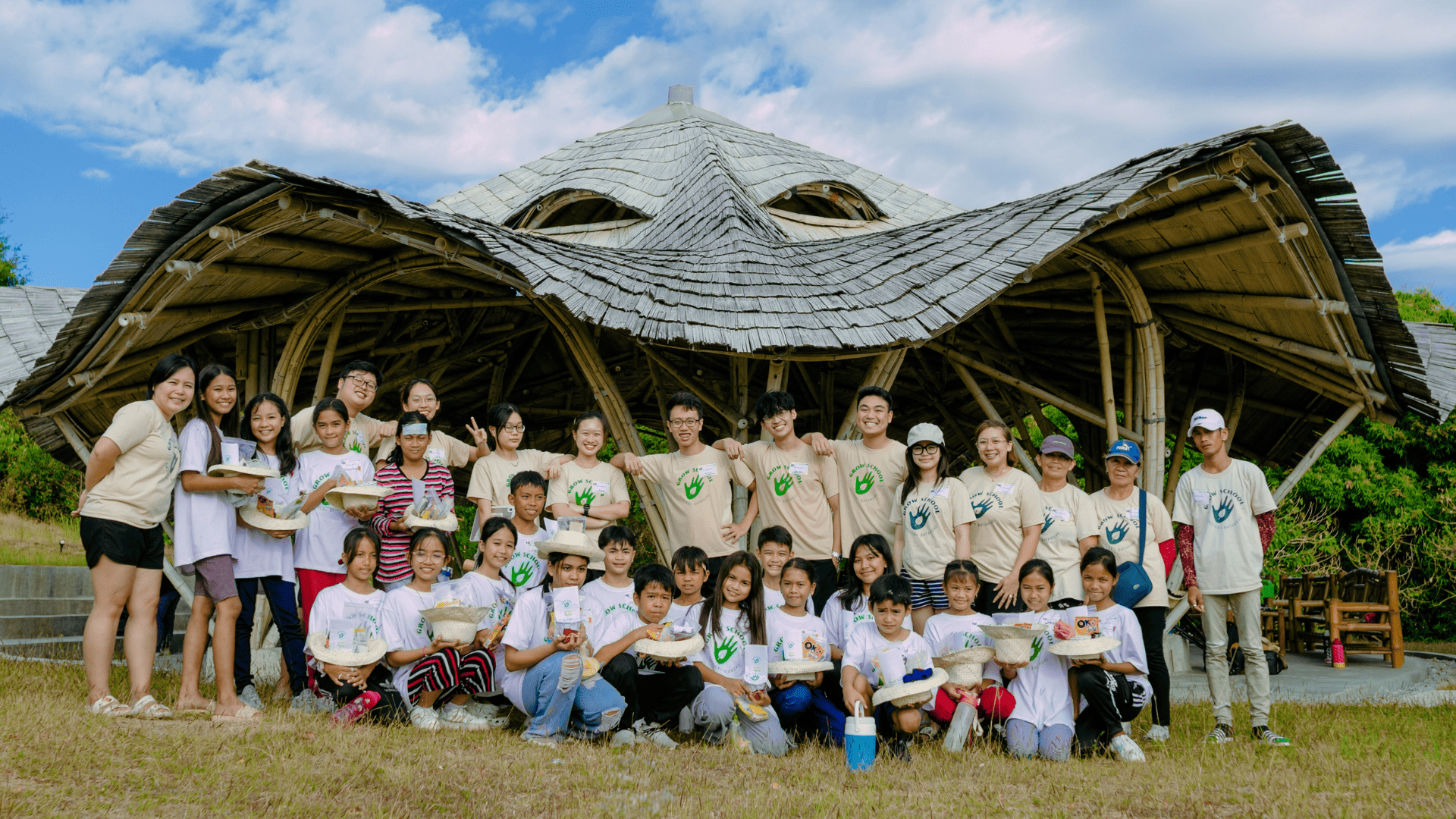 Bonds built beyond the classroom: Andrew (second row, sixth from right) with Team Bayanihan, and their community partners in the Philippines.
An Identity Built Together
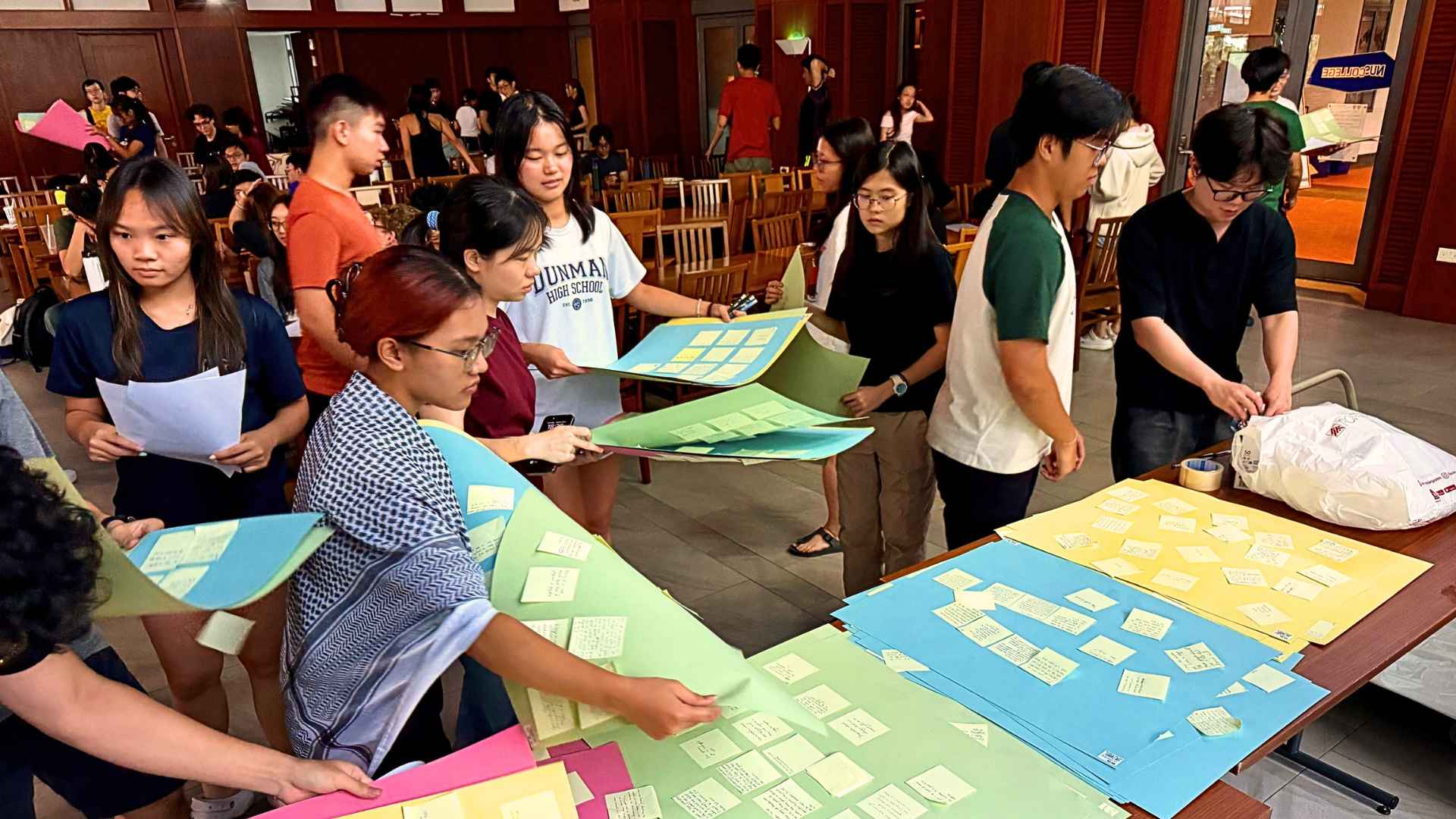
Back on campus, Andrew also displayed a strong commitment to community building. Beyond serving as a Residential Assistant and representing the college in both NUS Inter-Faculty and Inter-College Games, his experience as a member of the very first House Committee for NUSC stood out most to him. Together with his committee members, he worked toward forging an inclusive NUSC identity, all while honouring and integrating the rich traditions of their USP and Yale-NUS predecessors.
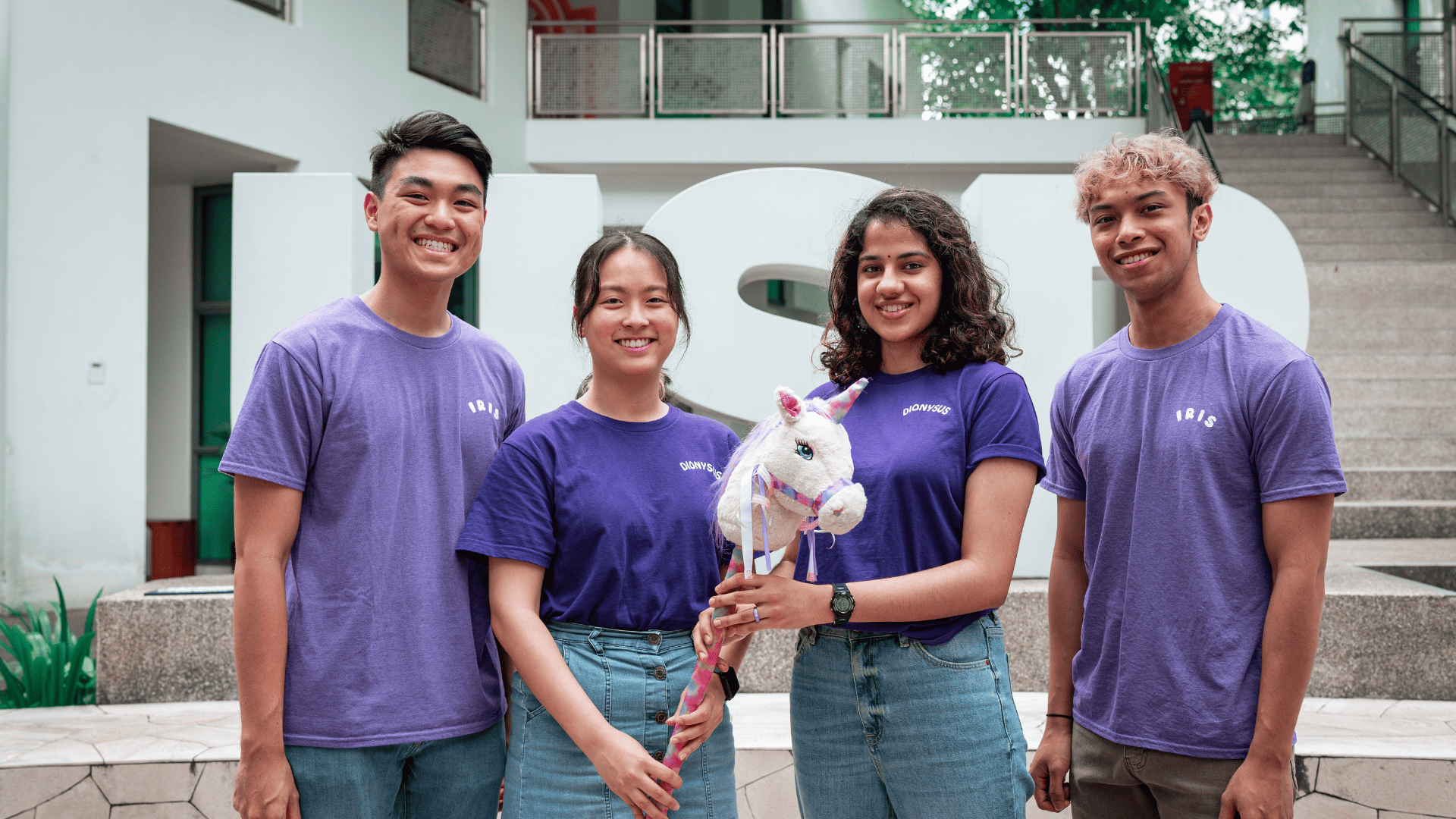 Andrew (leftmost) with his fellow NUSC Purple House Committee members.
“From planning games and activities to weekly dinners with our house members, my experience in the House Committee will always remain my favourite student life experience in my time at NUSC,” Andrew reminisced.
One of his most memorable moments were the late-night conversations he had with his fellow residents. The interactions with his batchmates from different countries and majors, all with their own life experiences, areas of expertise and interests, opened his eyes to new perspectives in ways he would never have been able to think of himself.
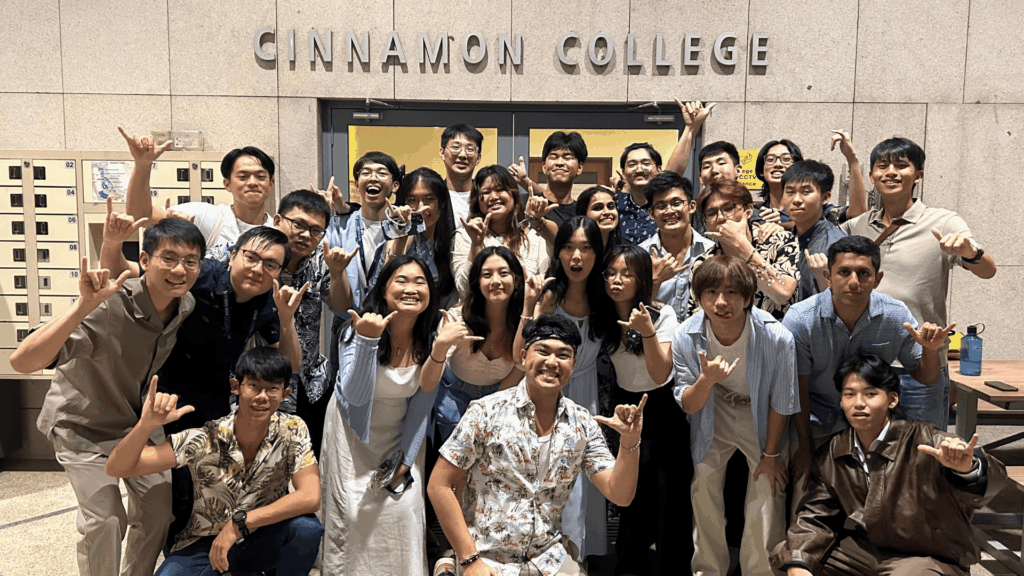 Home away from home: Andrew (centre) with his fellow residents at NUS College.
Charting New Horizons
As Andrew took the stage to address the first graduating cohort of NUSC, he left them with a quote by the founder of scouting, Lord Baden-Powell: ‘Paddle your own canoe’. These four words serve as a profound reminder of the autonomy they cultivated while building NUSC’s identity from the ground up – charting their own courses, embracing the unexpected and authoring their own definitions of impact.
“As we graduate today, the world ahead of us may feel uncertain, unpredictable and at times, overwhelming,” Andrew reflected during his speech at the Commencement Ceremony. “But if there is anything our experience as the inaugural cohort has taught us, it is that we are capable of navigating uncharted waters. We have already spent four years learning how to improvise, adapt and overcome, even when the destination was unclear.”