By Marcus Chua
Residential Student Life Manager, NUS College
Marcus Chua reflects on his dual role of participant and residential staff at his colleague, Bianca Tham’s fireside conversation about pornography, and how showing up, listening closely and nurturing relationships is as central to building community as organising the programmes themselves.
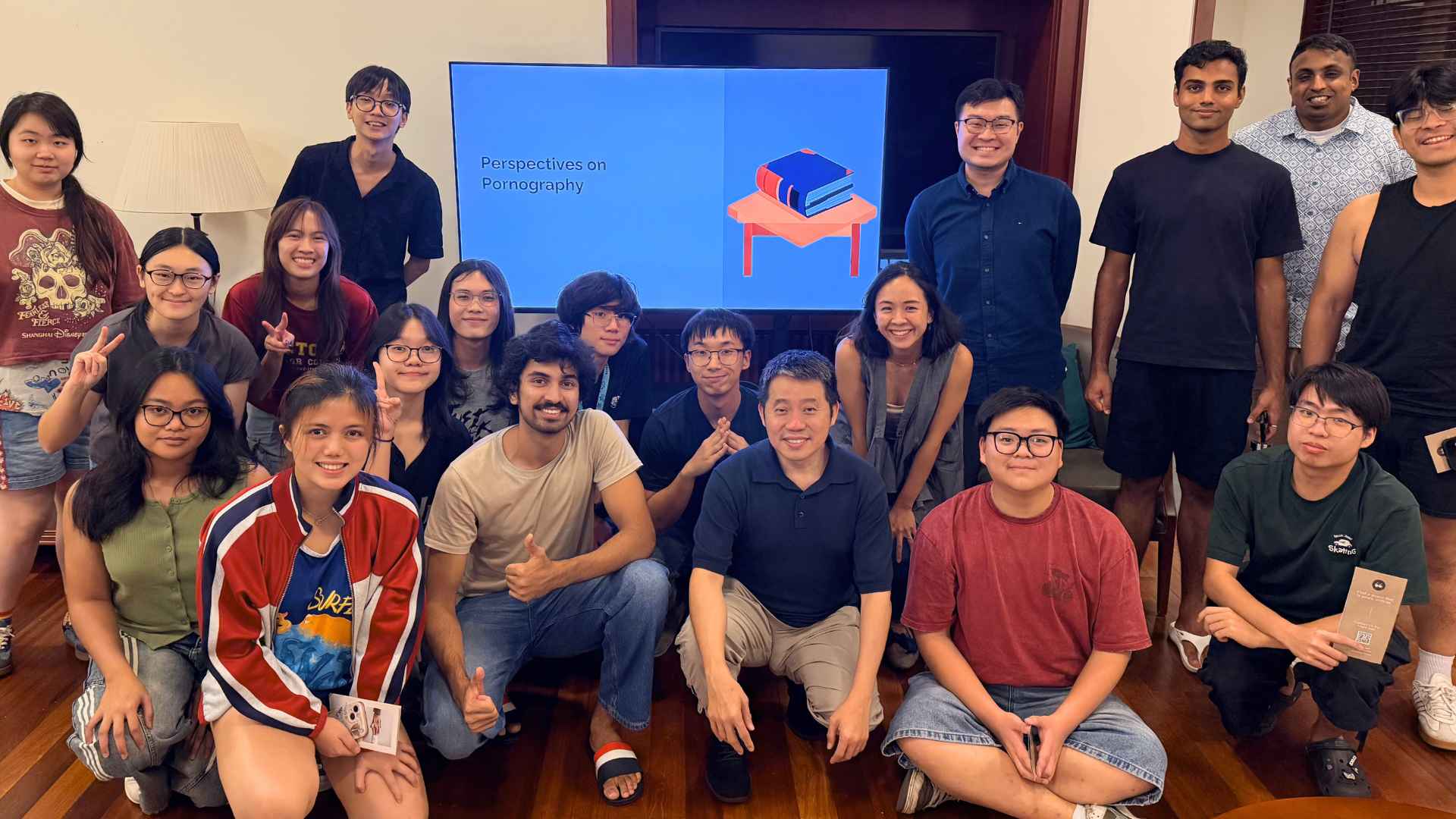 Participants and guests gather for a photo in the Cendana’s Master’s Commons.
The Telegram invitation arrived with a corn emoji and a reassurance: there was “no shame” in turning up. The title, Let’s Talk About Porn, had evidently done its work. For all pornography’s accessibility in private, discussing it openly still required the peculiar reassurance that attendance was not in itself a confession.
On 15 September 2026, that invitation brought us to NUS College, where Residential Student Life Manager Bianca Tham had invited Ng Liang Wei, Executive Director of Indigo & Co, for her semesterly fireside series on love, family and relationships. The discussion concerned well-being, intimacy and addiction, with questions of moral judgement deliberately set aside, although the distinction became rather more complicated once the questions began.
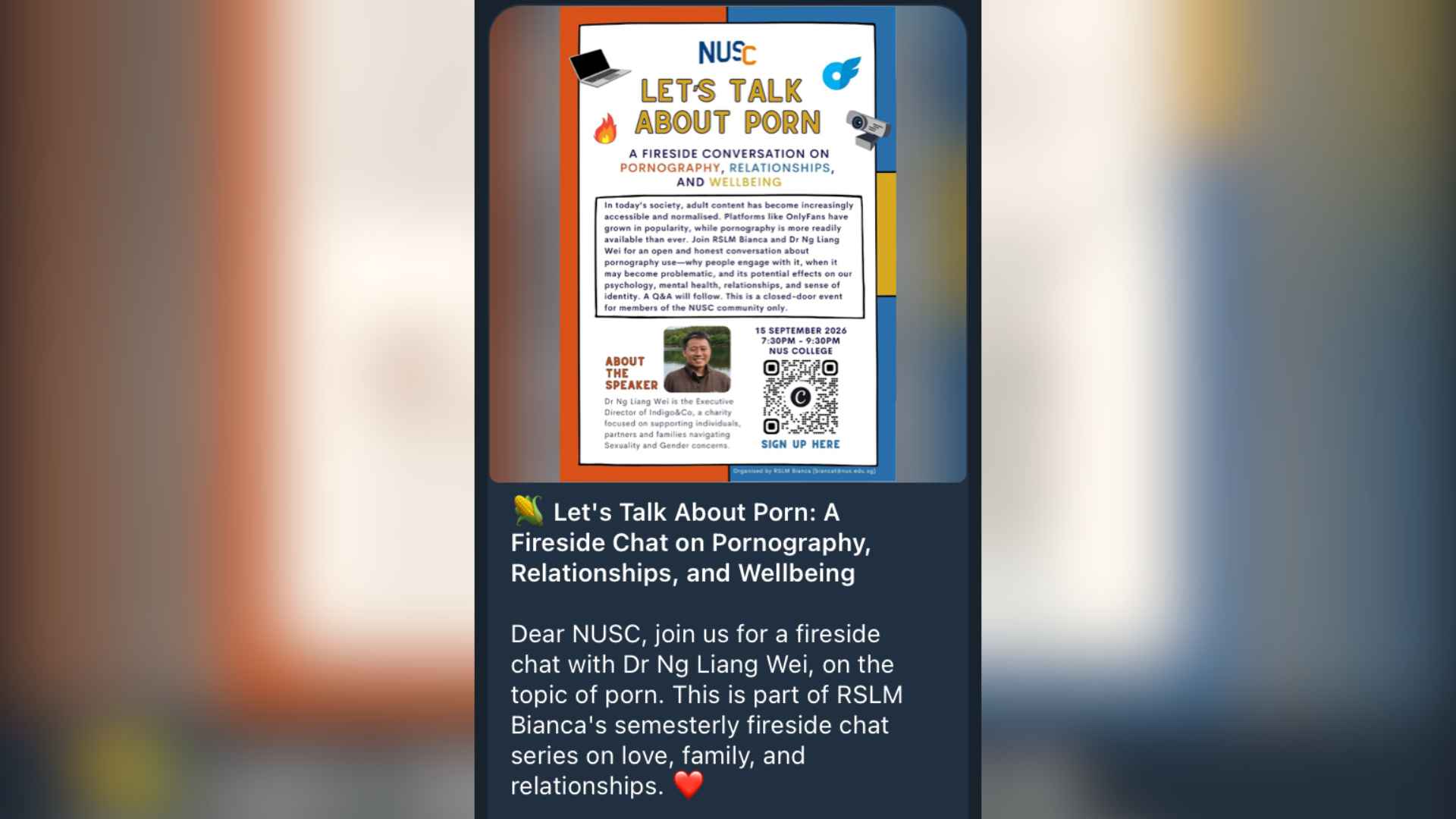 The Telegram invitation to Let’s Talk About Porn.
As a fellow Residential Student Life Manager, I attended in moral support of my colleague, but also because attending a diverse range of programmes was a useful way to take the pulse of a college community. While organising events gave me an opportunity to consider what questions ought to be asked, sitting amongst participants offered another education in what people also wanted to know.
The evening took place in Cendana’s Master’s Commons, with welcome servings of strudel and seats arranged so participants could see one another. Bianca invited Liang Wei to arrive early, giving him time to familiarise himself with the setting before helping students settle into a difficult subject. Likewise, I always found hospitality worked in both directions when designing programmes: residents welcomed guests, who, once comfortable themselves, also helped everyone feel at ease around the topic they brought along.
Serendipity played a great role in our work too. Accompanying Liang Wei was Daniel, a social worker at Indigo & Co whom I gleefully recognised from our college days at NUS’ Chua Thian Poh Community Leadership Centre. It was a pleasant reunion and reminder of how much depended on relationships established before programmes even took place. For instance, Bianca had built trust with Liang Wei at an earlier event to earn a successful invitation; Indigo & Co, in turn, had brought Daniel in to support the discussion and remain available to students afterwards. Behind two hours of programming were relationships cultivated over much longer periods, with the prospect of new ones to follow. This was conscientious programming manifest and something we incorporate in our mentorship to demonstrate how building relationships and networks lead to trust and collaboration down the road.
And so Bianca opened the session. As a former secondary-school teacher, she explained her observations about young people’s increasingly early exposure to pornography and changing sexual content online. The room acceded to the Chatham House Rule and nobody needed to justify their attendance.
Liang Wei began by recalling a time when pornography was harder to obtain: magazines had to be found and paid for and a shortage of spare money could be a remarkably effective deterrent. Much of that effort had since disappeared. Accessibility, however, opened onto more complicated questions: what were people seeking when they watched, how might pornography shape intimacy and what could parents do about increasingly unavoidable exposure?
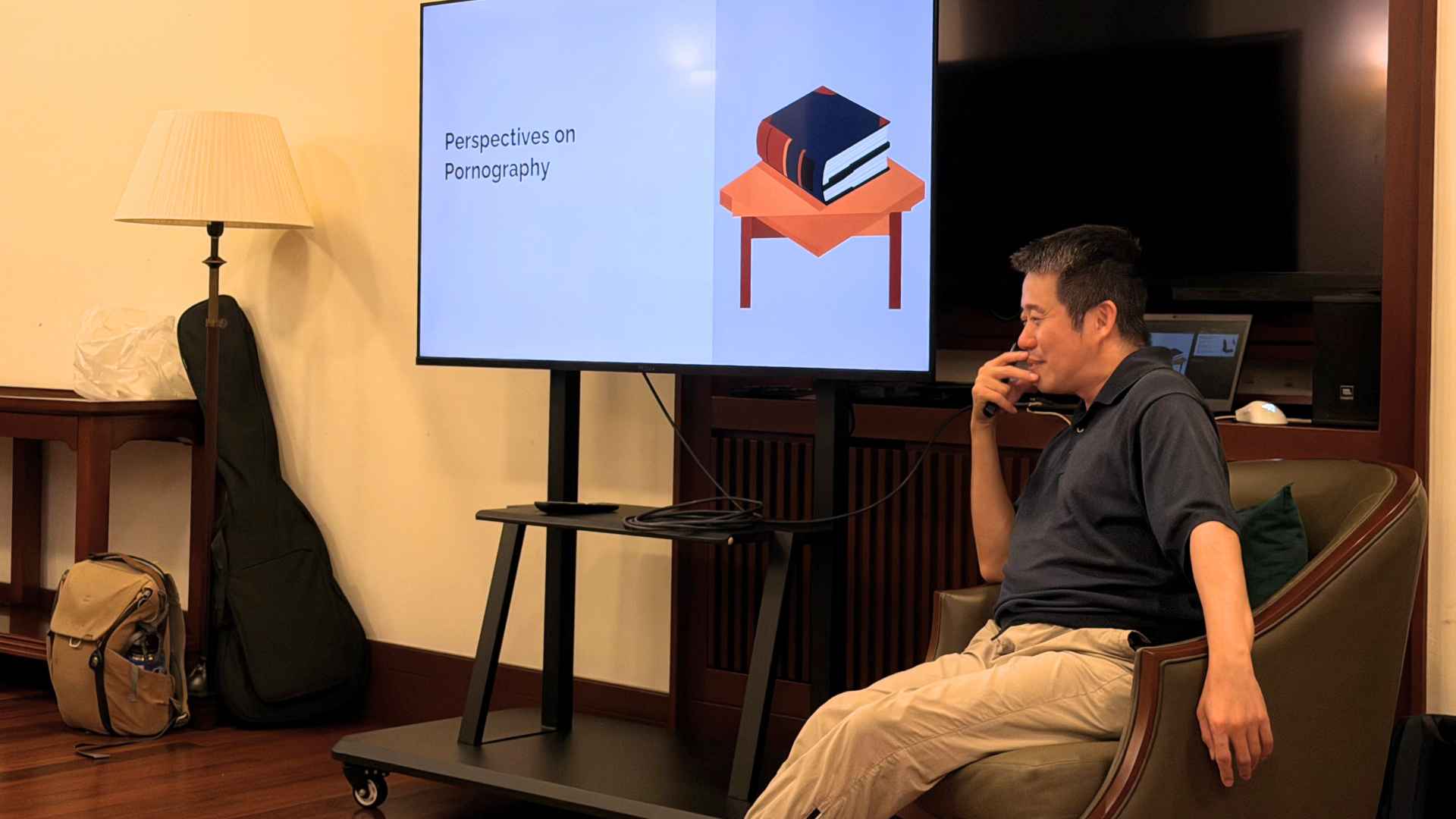 Dr Ng Liang Wei, Executive Director of Indigo & Co, facilitating the open discussion.
The answers, in Liang Wei’s clinical experience, extended well beyond sexual gratification. For one, pornography could offer an escape from stress, relief from loneliness or a source of imagined intimacy. He also noted that understanding addiction required examining the circumstances surrounding consumption, including the full range of distress and disruption to daily life, to one’s difficulty in regulating an unwanted habit.
As participants grew more comfortable, questions ventured into harmful sexual interests, exploitation and possible links between pornography and sexual offending. Liang Wei was careful to distinguish mere associations from the proof of causation.
Curious about what had stayed with others, I subsequently reached out to interview one student participant anonymously. They recalled a slide comparing dopamine-related effects of pornography with experiences such as drugs and sex; the numbers, they felt, made its potential consequences more tangible. Their second reflection interested me even more. Subjects such as paedophilia and bestiality, they observed, were often so morally repugnant that they could “throttle discussions”, as people felt compelled to restate their disapproval before anything substantive could be said.
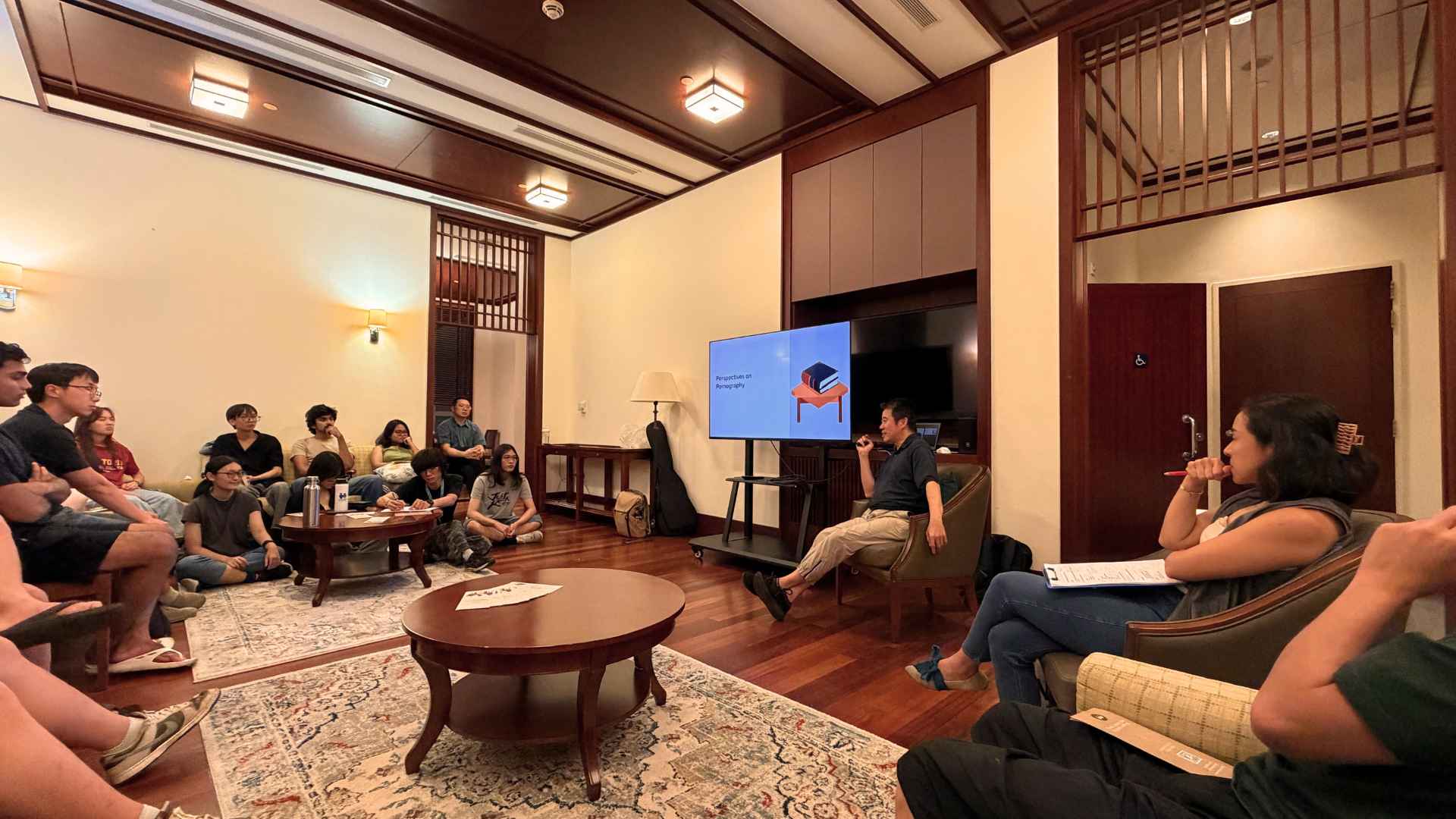 Participants seated in an open-circle arrangement for the fireside conversation.
As I looked back on the evening, I appreciated Liang Wei’s candour and the tact which allowed participants to examine difficult subjects without feeling obliged to make their moral positions the centre of every exchange. The evening continued with questions about couples; one considered the difficulties of supporting a partner experiencing compulsive behaviour; one about children and managing boundaries in a way that allowed room for growth.
Liang Wei made an observation I found relevant well beyond pornography, including to my calling in young people’s holistic development. He said that openness required discipline in how people engaged with one another’s ideas. In our session on porn, an invitation to speak began a conversation, but the quality subsequently depended on how participants listened, civilly disagreed and considered circumstances different from their own.
This brought me back to Bianca’s initial corny invitation, which assured us about feeling no shame in being there. By the end, I thought about the elements of reassurance that had made the evening possible: the strudel, a well-prepared and warmly hosted guest, relationships cultivated long before the evening itself and the deliberate assurances and openness that encouraged difficult questions. The fireside conversation offered such a space for two hours. My hope coming out of it was that, the next time someone had something difficult to explore, they would know another person in their community with whom they might begin.