By Marcus Chua
Residential Student Life Manager, NUS College
An afternoon at HSBC’s head office prompted questions about how we recognise the value of unfamiliar experiences. Marcus Chua, NUS College Residential Student Life Manager and organiser of Inside the Industry series, reflects on what students and alumni discovered through conversations about education and working life with HSBC’s senior management.
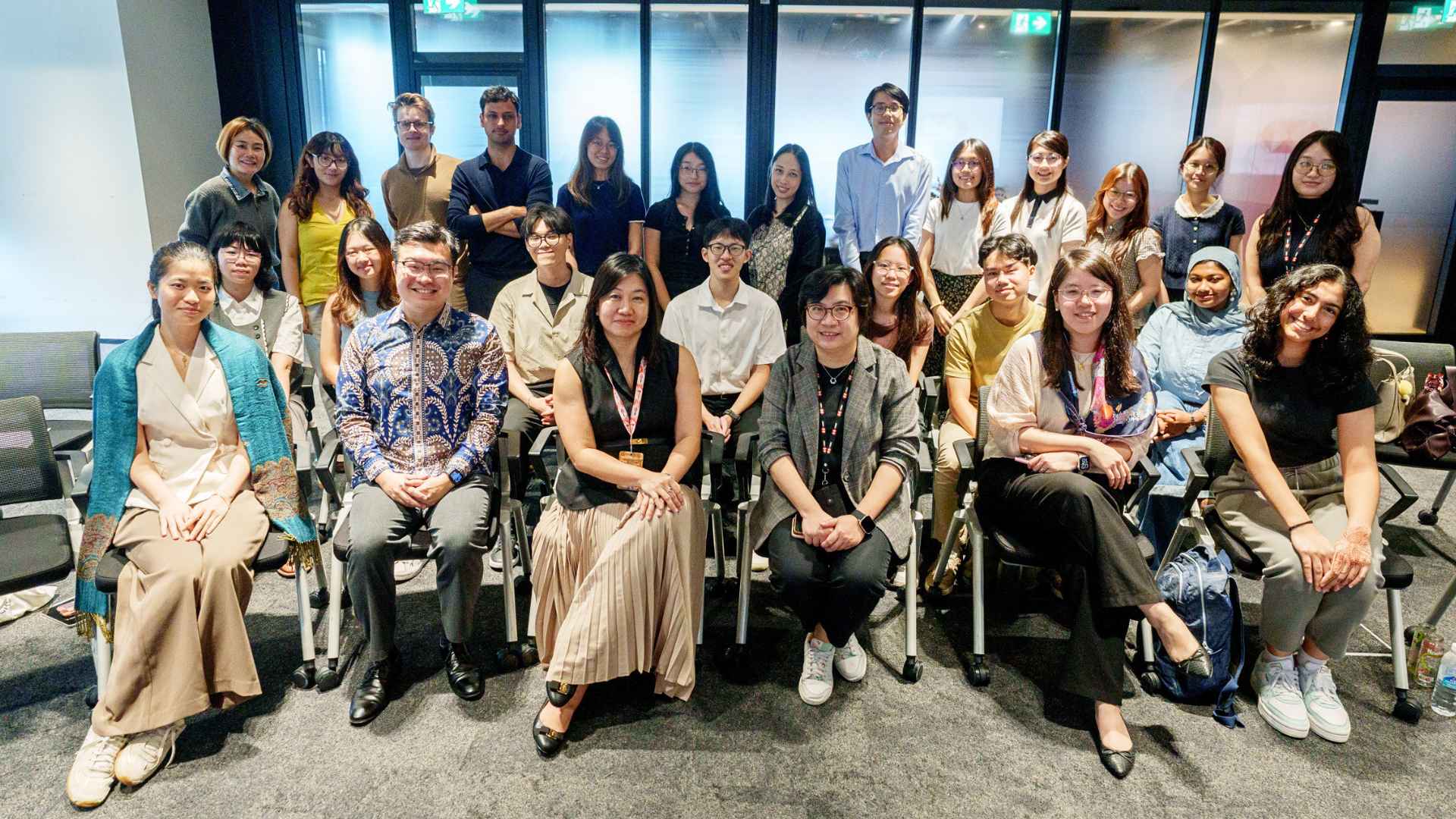 All smiles after the session in the Collyer Quay room of HSBC’s head office.
A student might reasonably ask why someone studying Life Sciences, Literature or Anthropology should spend an afternoon at a bank. I have long been inclined to turn the question around and ask what young adults might miss by visiting only places whose relevance they can already explain. That question sits behind Inside the Industry, a series I organise as the Residential Student Life Manager to bring NUS College students into the workplaces of alumni and help them intimately encounter the lives and choices behind different professions. Following our visit to Rainbow Centre, where we considered education, vocation and the Good Life, our afternoon at Marina Bay Financial Centre on brought us into a different professional world.
The visit came together with my fellow alumna, Rachel Handoko (Urban Studies + Yale-NUS ’25). Rachel was a Corporate & Institutional Banking Graduate Analyst at HSBC. Together, we coordinated an afternoon grounded in the experience design we remembered from our time of professional exploration at Yale-NUS College, introducing current students not only to the bank’s different businesses but also chewing on the non-linear journeys possible for people willing to explore beyond their own disciplines. In other words, this was not designed to be a conventional outreach event or networking session, and Rachel’s own journey as an Urban Studies graduate was a useful invitation for students to reconsider how directly a degree corresponds to a profession.
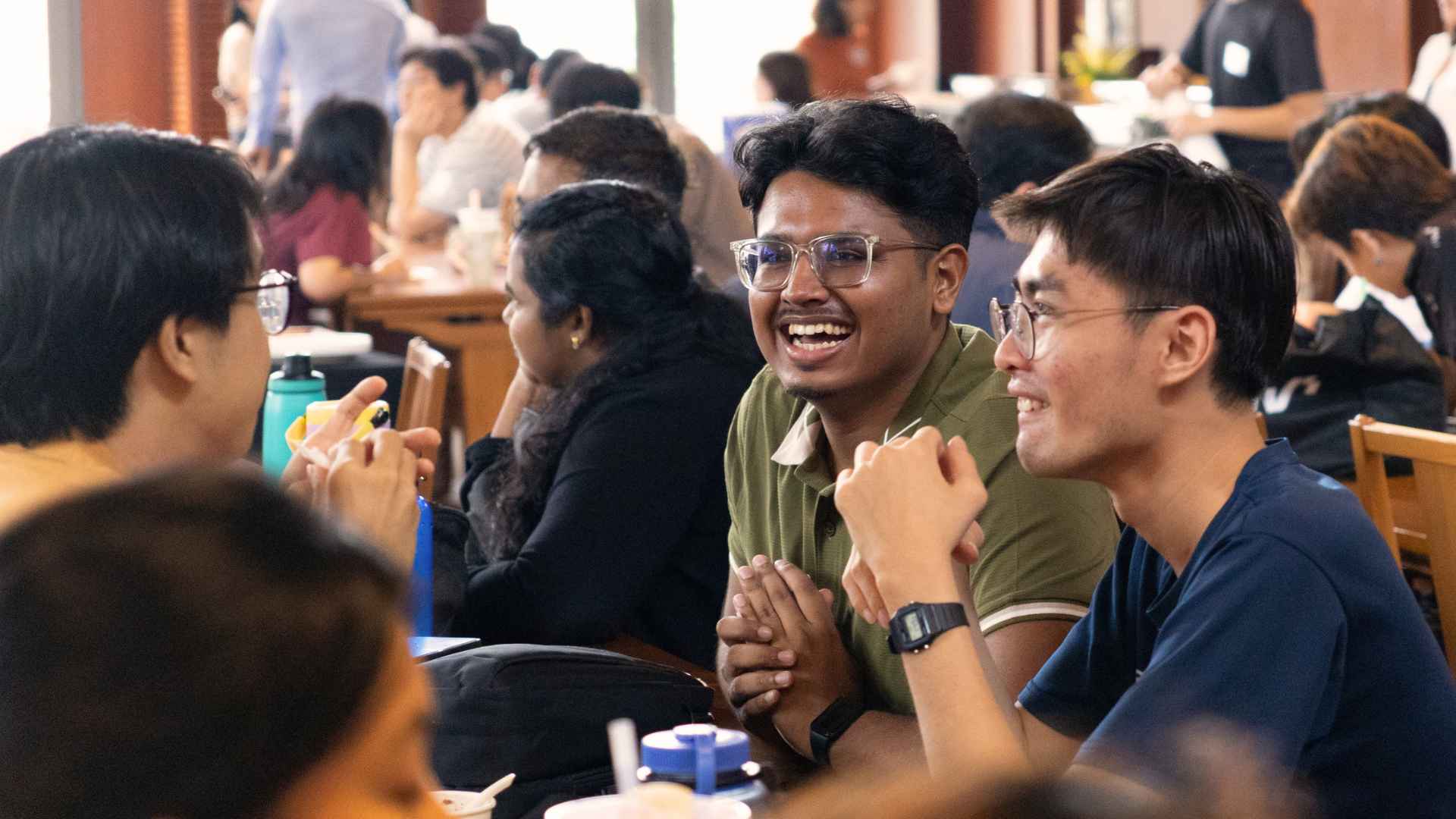
So we arrived at Marina Bay Financial Centre amid the lunchtime crowds; after visitor clearance and a 40-storey vertical ride, we were welcomed into the collaborative workspace and pantry overlooking Singapore’s southward skyline, before taking our seats in the amphitheatre-style arrangement of the Collyer Quay room. Our hosts graciously provided a selection of bakes and we thus began in conversation, but first amongst ourselves. I say ‘amongst ourselves’, because in our pre-visit briefing, I had encouraged participants to approach the afternoon collaboratively, or ‘collaborative networking’, as I coined it. Participants were handed a mentoring packet which included a comprehensive overview of the experiences and interests already among us as participants. The belief was that knowing a peer’s interests could help someone draw them into a conversation or recognise a person they might appreciate meeting, amongst other ways of synergising the networking experience beyond what an individual could do. Although, that meant there was plenty to discover first within our own group that could later help us present ourselves better to our hosts, instead of each person fending for themselves as if there were any reason for us to be competing against one another.
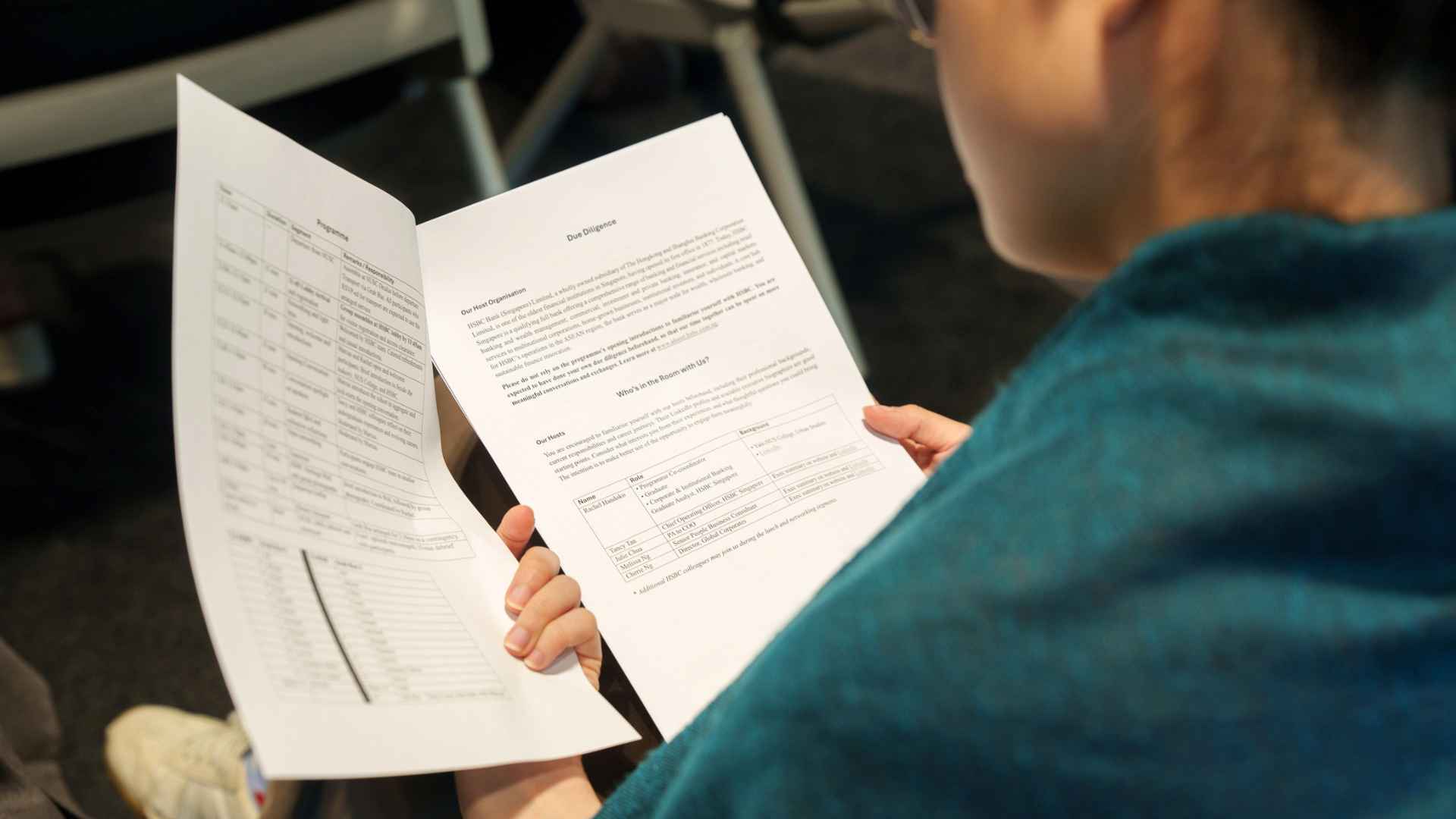 Participants reviewing the comprehensive ‘mentoring packet’ to help them prepare for the programme and approach networking collaboratively.
Hosting us were Tancy Tan, HSBC Singapore’s Chief Operating Officer; Melissa Ng, Senior People Business Consultant; and Cherie Ng, Director, Global Corporates. What made it special was that our hosts were members of the alumni community as well.
Just as we had their executive summaries, so too had we prepared a dashboard for our hosts, which highlighted the profiles of our students and their experiences, giving everyone a sense of the delegation beyond labels such as their undergraduate majors. To get everyone warmed up, I designed the icebreaker as an open forum centred on a shared prompt, inviting participants to build on one another’s responses. The prompt went, “What might the attention given to artificial intelligence be causing us to overlook?” Over several exchanges, we continued talking about the blind spots adjacent to the hype around artificial intelligence. One reflection stood out to me: how shall we nurture friends and community across our working lives?
As our panellists gained a sense of the room through the discussion, their reflections subsequently took on a practical texture. We therefore learnt about the nuances of relationship management, where in one instance, truly understanding a client could mean discovering why an earlier – even personal experience, would have shaped their response to an otherwise straightforward proposal. Moreover, knowing how to ask and recognising what might go unspoken, were amongst the insights our hosts shared, only in response to what they had observed of our students’ minds mid-discussion.
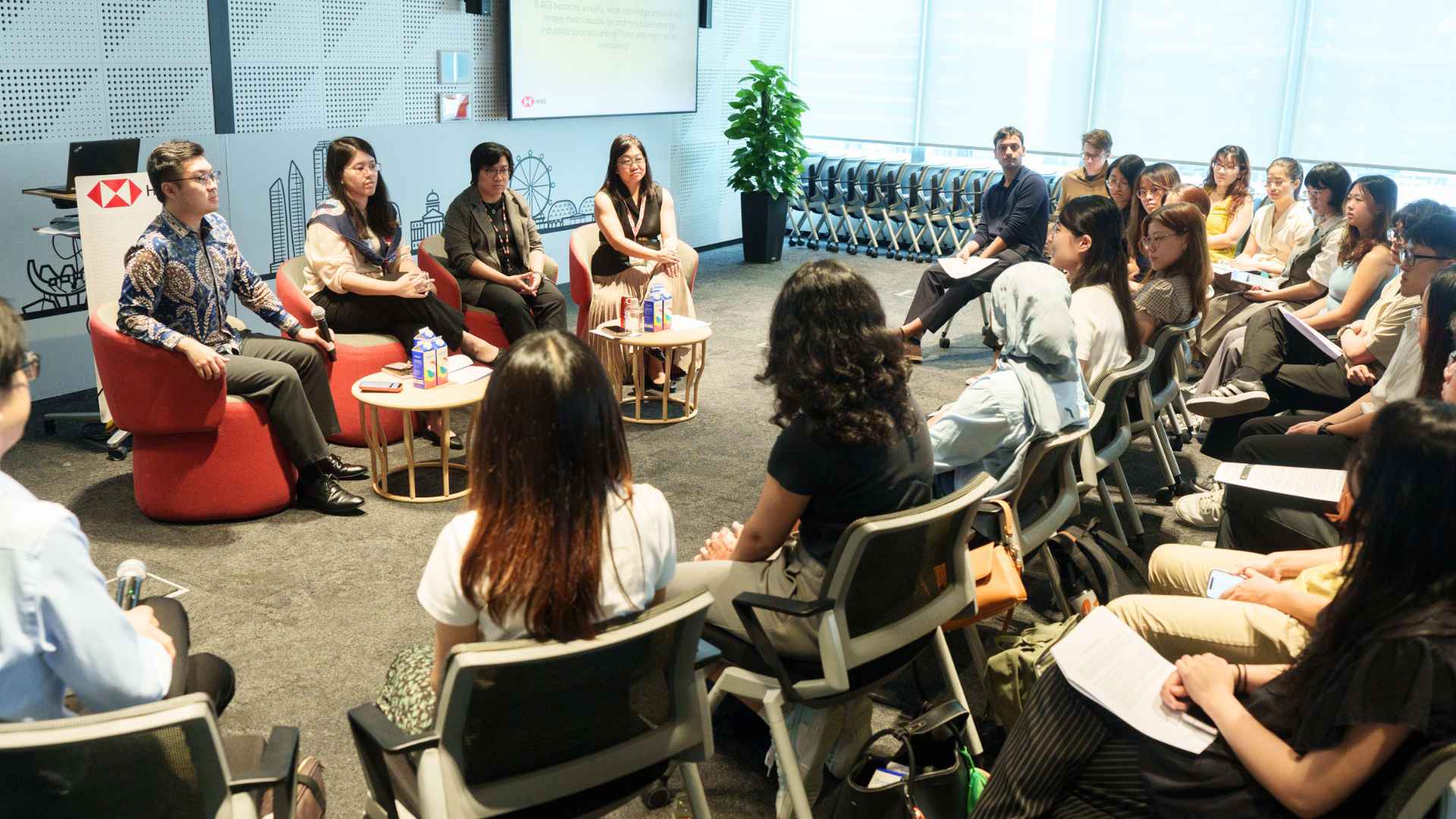 A forum-like discussion with participants responding to one another and adding nuance to questions and responses before arriving at shared takeaways.
Tancy’s account of her university experience brought us back, in particular, to the value of entering unfamiliar territory. She shared how the University Scholars Programme (USP) had helped change her measure of success and made her more willing to attend talks outside her expertise. Most strikingly to me, she described a growth mindset in which understanding even one per cent of what was discussed should count as a win. It was simply illuminating to see the variety of responses built on one another and to hear such intimate reflections on career and life from our panellists. This was unlike your run-of-the-mill Q&A, I thought. Deep down, I also started to think of the students who had passed over this visit because banking seemed unrelated to their studies; I thought more about my younger self too and how 20-year-old me would not have quite fathomed where I’d be today in this role of mentorship. I genuinely felt both struggle and intrigue over how difficult relevance could be determined, when we had only our existing impressions of a field to go on. But I returned quickly enough to the room and the conversation as its moderator, and I was just as quickly encouraged by the twenty-plus people who had given the afternoon a shot; by the possibility that an encounter could give us enough understanding to discover new questions and new directions we would like to pursue.
We heard how seemingly steady careers could encompass different roles and countries, and how a job taken for pocket money could prove unexpectedly useful later. Conversations grew in boldness and candour. One questioned how realistically we could balance interests with employability, and another hypothesised that comfort had to precede room for risk-taking, whilst others opined that comfort signalled a drop in learning.
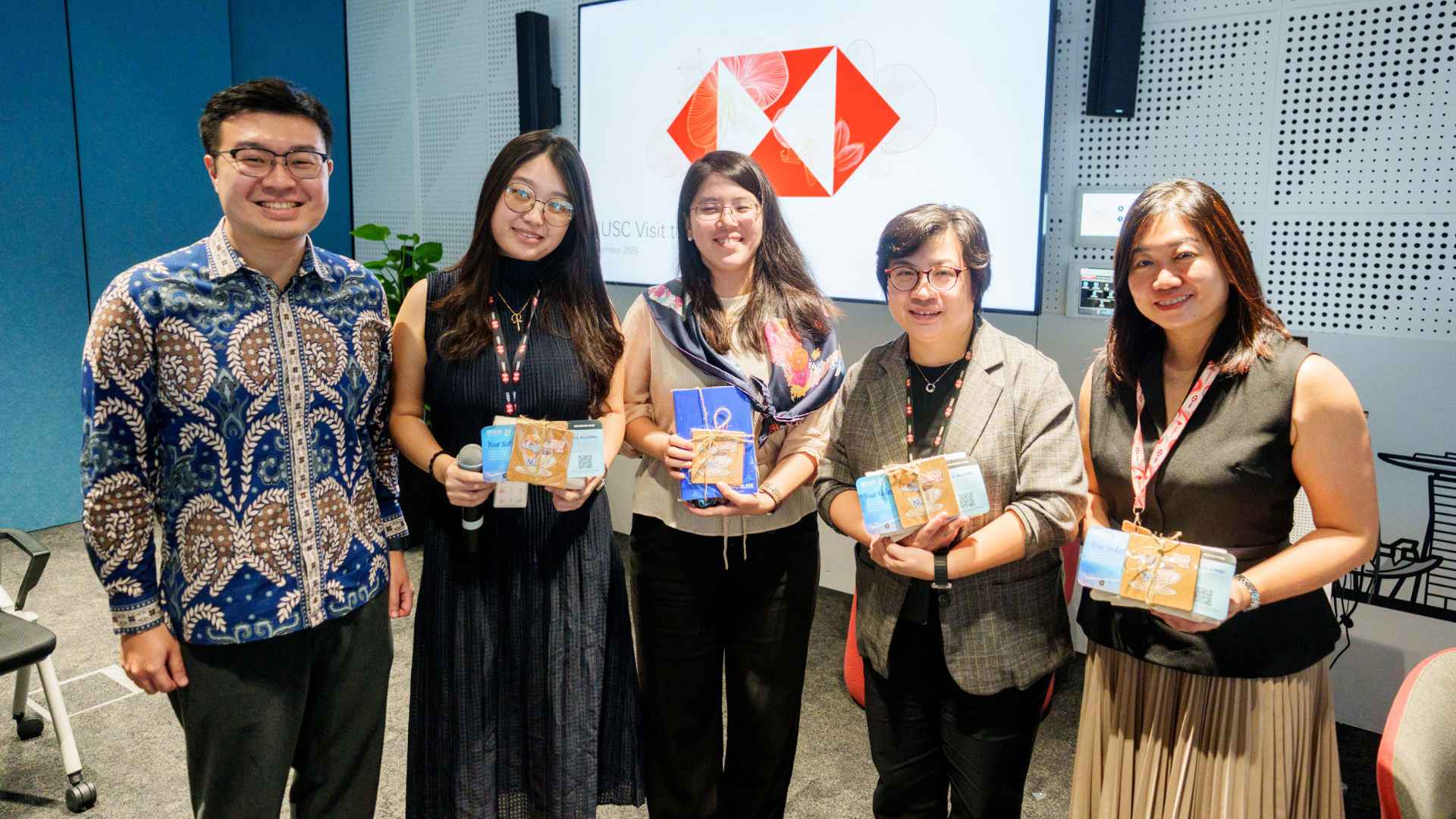 From left: Marcus (moderator), Rachel (coordinator) and panellists Cherie, Tancy and Melissa.
Trevor Gan (Data Science and Economics + NUSC ’30) later told me that the surprisingly non-banking flavour of the session and hearing everyone’s experiences made him more confident about trying different things. And while he felt a healthy pressure to speak up, he also hoped that beginning with smaller groups joined by individual panellists could be worth experimenting with in a future session; when participants begin envisioning future sessions, I appreciate that something has been set in motion; that such students, too, evolve from participants into co-creators.
Likewise, Vaith Ng (Life Sciences + NUSC ’30) found it refreshing to enter an unfamiliar industry, as well as to observe how her peers from other disciplines formulated their responses differently from each other. This brought me back to the point of relevance: so long as one had encountered a world outside the immediate demands of a degree and was left interested in exploring others, that would have been as relevant as it was invaluable.
Inside the Industry opens a door into an unfamiliar room to help one understand a little more than before; even if only one per cent — and hopefully leave with a penchant for more of the same, that is, another encounter with something different.